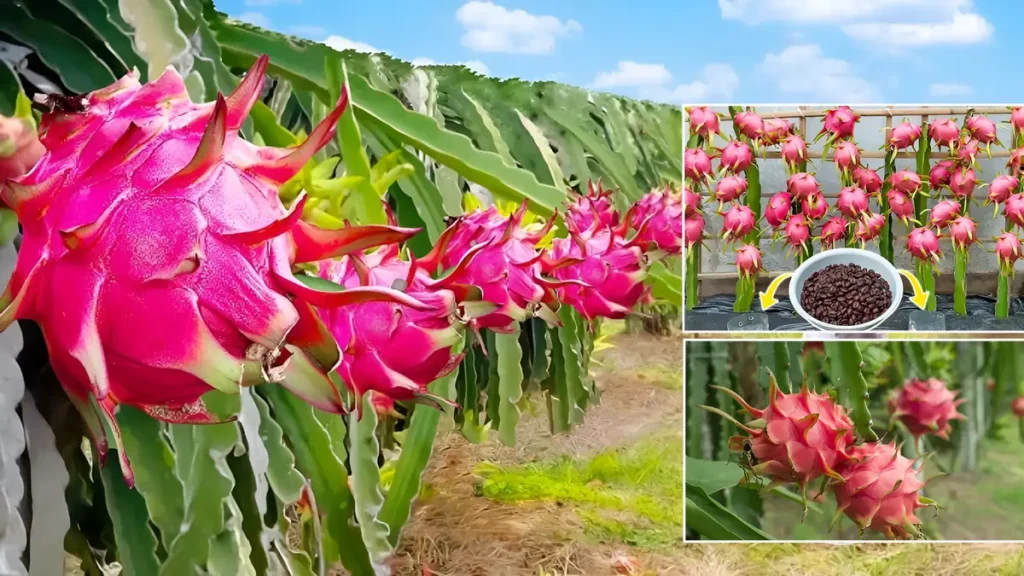
Dragon Fruit Farming at Home 2026: Dragon fruit is a unique, tropical fruit that adds both beauty and nutrition to your home garden. With its striking pink or yellow skin and speckled flesh, it’s not just eye-catching but also packed with vitamins, antioxidants, and fiber. Growing it at home is easier than most people think. With proper care, the right soil, and a bit of patience, you can enjoy a fresh, juicy harvest right from your own backyard or balcony.
Pick the Perfect Plant Variety
Choosing the right dragon fruit variety is essential for a successful harvest. Red-fleshed types are sweet and visually stunning, white-fleshed ones are mild and refreshing, and yellow-fleshed types are rare but extremely sweet. Consider your local climate and growing space before deciding. Some varieties are more tolerant of temperature changes, while others thrive in direct sunlight. Picking the perfect plant from the start saves effort later and ensures better flowering, fruiting, and overall growth.
Prepare Soil for Healthy Roots
Dragon fruit loves well-draining soil to prevent root rot and support steady growth. Sandy loam mixed with compost or organic matter works best. If planting in pots, ensure drainage holes at the bottom to allow excess water to escape. Adding mulch around the base keeps soil moist without waterlogging. Regularly check for compacted soil and loosen it occasionally. Healthy roots are the foundation of strong stems and abundant fruit, making soil preparation a critical step.
Provide Strong Support Structures
Dragon fruit is a climbing cactus that requires sturdy support. Using trellises, stakes, or wooden posts helps the plant grow upright and encourages more flowering. Vertical growth also saves space, making it ideal for home gardens or balcony pots. Make sure the support structure is strong enough to handle heavy fruit as the plant matures. Proper support prevents breakage and allows sunlight to reach all parts of the plant, resulting in healthier growth and bigger, juicier fruits.
Water Smartly for Best Growth
Watering dragon fruit requires balance: too little slows growth, while too much causes root rot. Water the plant deeply once or twice a week, depending on the climate and soil moisture. In hot and dry areas, more frequent watering may be needed, while in humid regions, reduce water to prevent fungal issues. Always allow the topsoil to dry between watering. Correct watering encourages strong stems, vibrant flowers, and a higher fruit yield without risking plant health.
Feed Plants for Maximum Yield
Fertilizing dragon fruit boosts growth, flowering, and fruit production. Use a balanced organic fertilizer with nitrogen, phosphorus, and potassium every 6–8 weeks. Supplement with compost or manure to enrich soil naturally. During flowering, adding extra phosphorus helps more blooms develop into fruit. Avoid overfertilizing, as it can cause excessive stem growth with fewer flowers. Proper nutrition ensures your plant remains healthy, flowers consistently, and produces large, sweet, and juicy fruits throughout the season.
Ensure Adequate Sunlight Daily
Dragon fruit thrives in bright sunlight, ideally 6–8 hours daily. Proper sunlight ensures stronger stems, vibrant flowers, and sweeter fruit. If growing in partial shade, use reflective surfaces or move pots to sunnier spots. Lack of sunlight can cause weak growth, fewer flowers, and poor fruit quality. By positioning your plants strategically, either in garden beds or balcony containers, you create ideal conditions for flowering and fruiting, ensuring your harvest is both abundant and delicious.
Prune Regularly for Better Results
Pruning helps dragon fruit stay manageable and encourages higher yields. Remove dead or damaged stems, as well as any shoots that crowd the plant. Regular pruning allows better airflow, reduces disease risk, and ensures sunlight reaches all branches. Focus on removing weak or overcrowded growth to strengthen the main stems. A well-pruned plant grows more flowers, which translates into a bigger harvest. Pruning also makes maintenance easier and keeps your dragon fruit plant looking tidy and attractive.
Protect Plants from Pests Naturally
Dragon fruit can attract pests like mealybugs, aphids, and ants. Using natural remedies like neem oil sprays or insecticidal soaps helps control infestations without harming the plant. Regularly inspect stems and flowers for early signs of pests. Introducing beneficial insects like ladybugs can also help manage pest populations. Healthy plants are less prone to disease and produce better fruit. By practicing organic pest control, you keep your home-grown dragon fruit safe, healthy, and chemical-free.
Harvest at the Perfect Time
Timing is crucial for a sweet and juicy harvest. Dragon fruit is ready when its skin is bright, evenly colored, and slightly soft to touch. Overripe fruit can spoil quickly, while under-ripe ones may lack sweetness. Gently twist the fruit from the stem or use a sharp knife for clean removal. Harvest regularly to encourage new flowering cycles. Properly timed harvesting ensures you enjoy the best flavor, texture, and nutrition from your home-grown dragon fruit.
Enjoy the Fruits of Your Labor
Home-grown dragon fruit is a rewarding experience, offering both beauty and nutrition. You can eat it fresh, add it to smoothies, or use it in desserts. Growing your own fruit reduces costs, ensures chemical-free produce, and brings the satisfaction of nurturing a plant from stem to fruit. With the right care, patience, and attention to soil, water, sunlight, and pruning, you can enjoy an abundant, sweet harvest year after year.